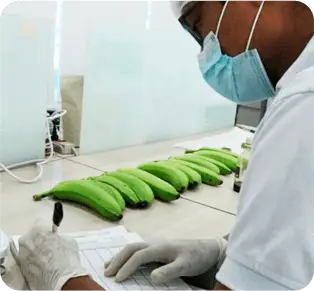
The Colombian Agricultural Sector Information and Communication Network reported that banana production in 2023 grew by 2%, totaling 2.6 million tons.
In this context, innovation emerged from the Banasan Group, which through the company Banaplus developed banana flour. To learn more details, Portalfruticola.com spoke with the manager and head of the Banaplus plant, Luis Rocha.
How did the innovation of developing banana flour come about?
It is part of the innovation strategy of the Banasan group, a company that has always been ranked 4th or 5th in banana production in Colombia, exporting fresh bananas to Europe and the United States.
Within the business innovation process, they identified that there were bananas that were not being exported—not due to quality issues but more due to commercial reasons—and decided to produce green banana flour.
 We have a great advantage because we have bananas certified under various agricultural export standards, as well as organic bananas. Additionally, we have good availability and quantity of bananas, which guarantees the productivity of quality raw material at the Banaplus plant.
Currently, we own about 2,200 hectares of land and have another 3,000 hectares through associations, which gives us approximately 5,000 hectares of banana production with a capacity of around 12 million export boxes annually. Of that, 10% can be considered available raw material for national production, and this is where we come in with our operation, processing about 30 tons of fresh bananas per day.
This makes us a large plant at the national level. In reality, banana flour is not a new concept as it has been traditional in the region and in certain parts of the country, where there are small-scale artisanal plants. What is innovative is the industrialization of these artisanal processes, allowing us to produce certified and standardized flour.
What is the production process?
Of the total fruit we process, about 3% is allocated to banana flour production.
In your opinion, what is the industrial value of developing a value-added product?
It’s a big challenge because it’s about teaching people to consume flours other than conventional ones. I believe this process will have a positive impact on the market because people are used to eating ripe bananas, but green bananas have nutritional benefits that ripe bananas do not have, although they also have differences—they are not sweet.
Producers need to understand that their product can be used in different forms.
What are the nutritional characteristics of the product?
Banana flour has several nutritional benefits; it is gluten-free, contains a high level of resistant starch, and also has a low glycemic index. It is highly recommended for people with celiac disease and diabetes.
In what preparations can it be used?
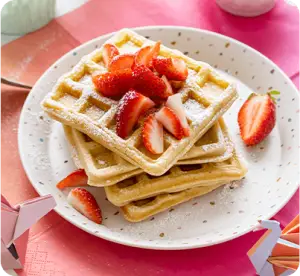
Domestically, it can be used for baby food, in bakeries due to its gluten-free advantages, as a thickener and softener in ice cream preparations, pancakes, and cakes.
In the commercial sector, to which markets have you exported the product?
We have already made exports to some industrial contacts. Our goal is to export about two containers of flour per month. To date, we’ve sent some samples to Europe and the United States, and we are in the process of finalizing these commercial deals and searching for clients to fill our production capacity.
How are prices in the markets?
They range between 4 and 6 dollars on average. At the company, we are clear that our bananas, with which we produce the raw material, are not from rejected bananas, as we use bananas that have the same certifications as export bananas.
What presentations do you offer for the product?
In the national market, we have a brand called Banavital, where we offer both organic and conventional banana flour, with 250g of conventional flour and 500g of organic flour.
For industrial purposes, we offer 25-kilogram boxes, which are used for export.
We also provide our clients with the option to place their own label on the packaging. If a customer needs a special or customized package, we can also accommodate that.
 What is the commercial projection of the product in the coming years?
In the long term, we have the capacity to produce up to 5 tons per day, which would allow us to ship a 20-ton container weekly.
What is the social contribution of the product?
The banana production process has an important step, which is peeling the fruit, and this can only be done manually. The women are the most skilled at this process.
Our plant is strategically located in a logistics park in the city of Santa Marta, and there are some marginalized neighborhoods around this park. In this sense, Banasan and its foundation, from a social perspective, carry out a process of recruitment and training for mothers who are the heads of their families.
In 2022, we trained around 80 mothers who were heads of households, of which 30 started working with us in the peeling and food handling processes. For most of them, this was their first formal job, and it has given them an advantage, improving their homes and quality of life.
At the moment, we are working with the Banasan Foundation to provide the product at a differentiated price for the city’s nutritional programs.